
The Gannet - Built for One Thing
How do you hit the sea like a missile and come back up with a fish?

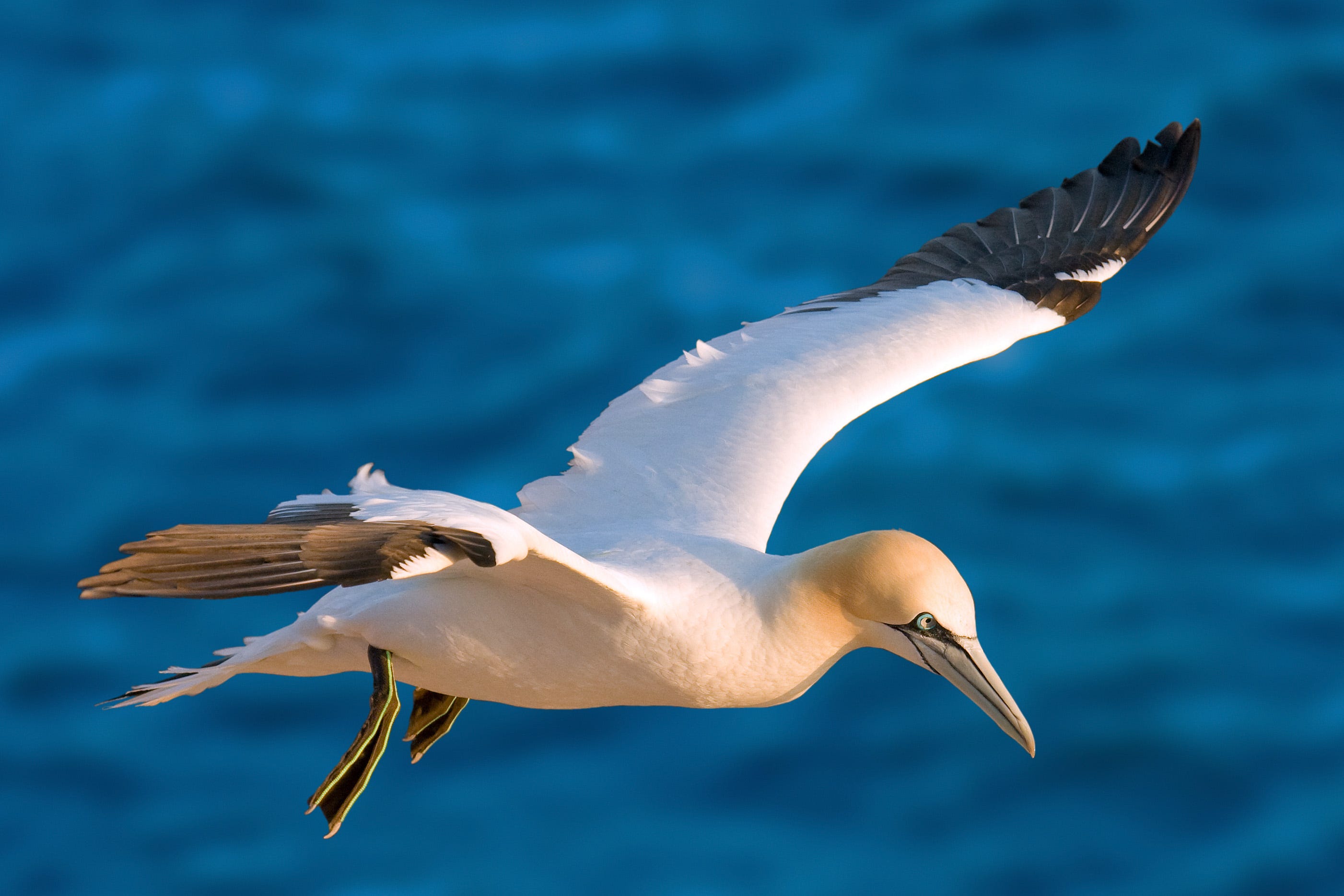
My father travelled to Antarctica when he was younger. He went the long way past the Cape by ship. He’d tell me about the seabirds that he saw on the journey and also during his time in Antarctica. Whilst passing the South African coast he witnessed big, pale, startling things, nothing like the gulls back home. I didn’t really understand what he was describing until I went to Cape Town myself, years later, and saw cape gannets for the first time.
Then I understood completely.
The northern gannet is Britain’s largest seabird. White body, black wingtips, a pale yellow head that looks almost painted on. Beautiful in the way that things built entirely for one purpose are beautiful. Because that’s what the gannet is, a machine for diving.
Dropping from heights of up to thirty metres they hit the water at fifty miles an hour, using a survival mechanism to survive this impact, involving air sacs and reinforced skulls. They need all the help they can get! They have evolved air sacs between their muscles and skin, a reinforced skull, and nostrils that seal shut, breathing instead through the sides of their beaks. Every part of the bird is the solution to a problem. The problem being: how do you hit the sea like a missile and come back up with a fish?
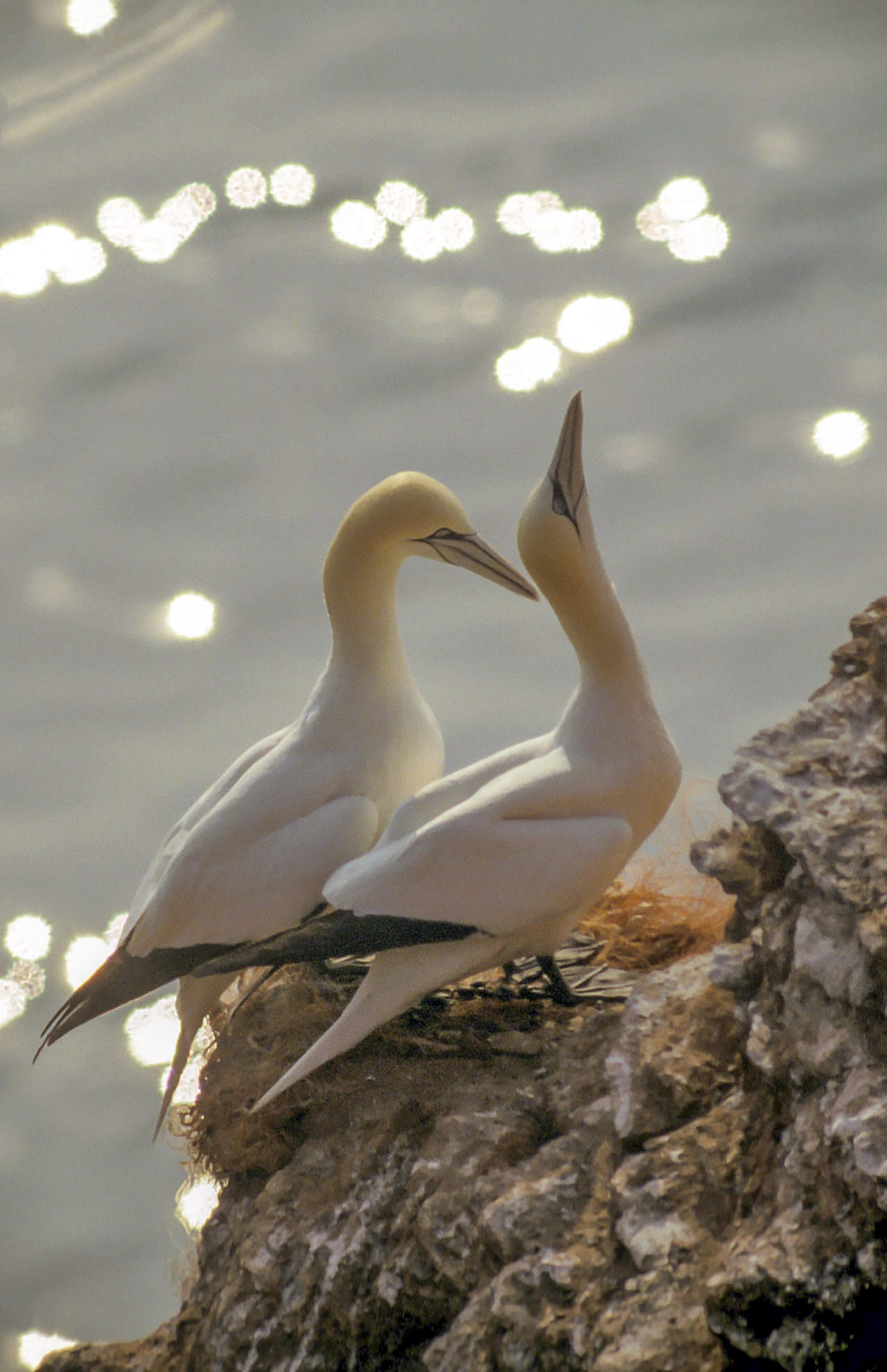
They breed in enormous colonies on remote cliff faces. Bass Rock off the Scottish coast holds around 150,000 birds. The noise, apparently, is extraordinary. The smell a whole lot worse.
There’s not much folklore attached to the gannet, not compared to the raven or the hare. It exists too far out, too far north, too far from the places where stories get made. Sailors knew them as a sign of land nearby, or of good fishing below. That was enough. The gannet didn’t need a mythology. It had the dive.
Watching one fold its wings and drop is one of those things that stops you entirely. Pure, committed, without hesitation.
My father was right to remember them.
Sources: Wildlife Trusts, wildlifetrusts.org. Birdfact, birdfact.com. Wikipedia, en.wikipedia.org.
Thanks for reading The Wild Margin! Subscribe for free to receive new posts and support my work.
Thanks for reading. If you enjoyed this you can find more at The Wild Margin, or come and see the paintings at stephenholder.art. I’m also on Instagram and Facebook if you’d like to follow along there.